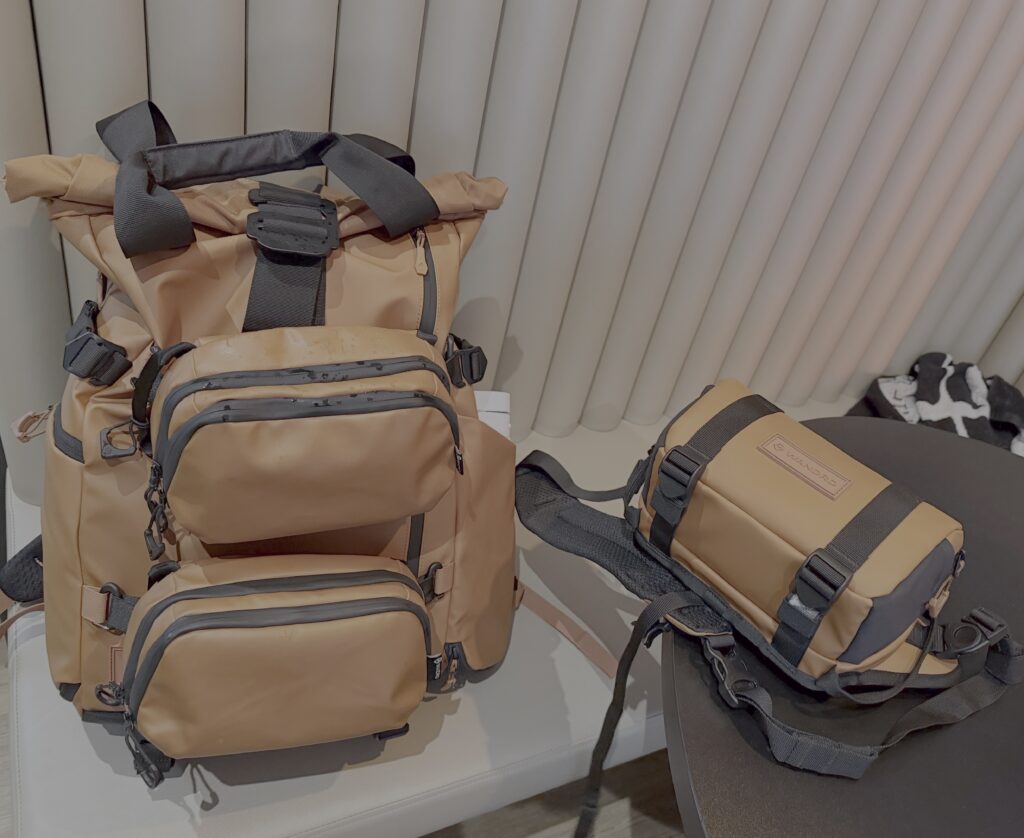
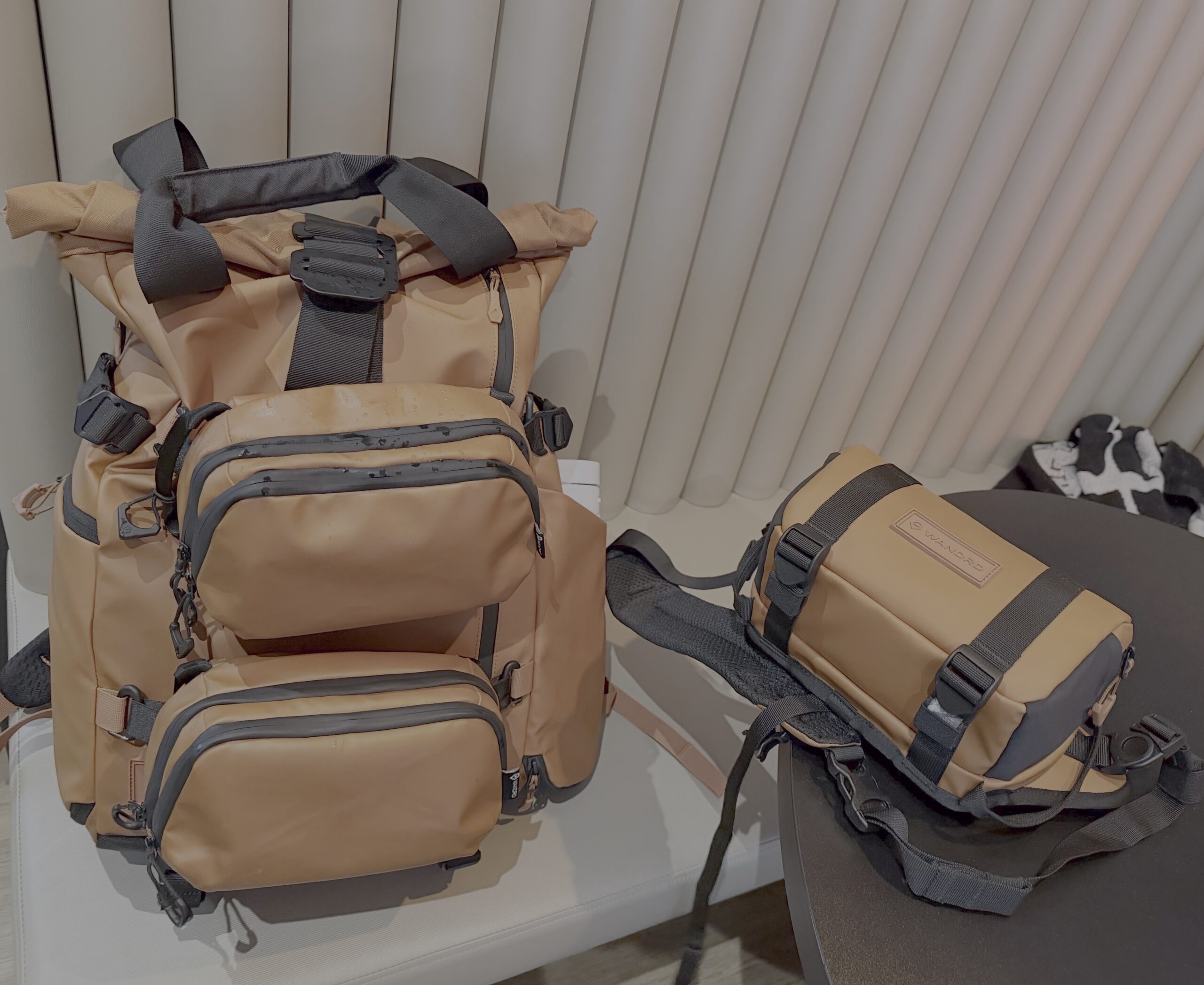
The PRVKE V3 was not a backpack that urgently needed a successor. It was mature, robust, and for years an exceptionally reliable companion for camera equipment, technology, and travel. Accordingly, I was skeptical about the V4: Is this actually a meaningful evolution or merely enough small changes to justify a new version number?
After extended use, the answer is surprisingly clear: The switch was worth it. Not because the V4 reinvents everything, but because WANDRD has made improvements in several crucial areas that make a bigger difference in everyday use than they do on a spec sheet.
The New Carry System Makes the Difference
The most noticeable improvement concerns the shoulder straps and their redesigned attachment points. The backpack sits closer to and more securely against the body without feeling uncomfortably stiff. The load is distributed noticeably more evenly across the shoulders and back. Especially with heavy camera equipment, this is not a cosmetic change, but a matter of actual carrying comfort.
Of course, this does not make the weight of a fully packed camera bag disappear. The V4 cannot outsmart physics either. But it handles the load noticeably better. The straps sit more naturally, and the backpack develops less movement of its own while walking. This is not something you notice during a quick try-on in the living room, but after an hour on the go.
Small Opening, Big Impact
The additional zipper in the upper section is one of those changes that initially seems completely unspectacular. In daily use, it quickly becomes one of the best arguments for the V4.
With the V3, the rolltop had to be fully opened for many types of access. It was not complicated, but it was still an extra step. With the V4, smaller items can be reached much more quickly without having to deal with the entire upper closure every time. The rolltop nevertheless retains its actual function and therefore also the characteristic PRVKE design.
Changes like these reveal whether a product was merely revised at a desk or actually developed further based on real-world use.
Zippers, Zipper Pulls, and Handles
The new zippers and zipper pulls also leave a better impression. They operate more smoothly, are easier to grip while wearing gloves or while moving, and overall convey greater mechanical precision. The redesigned side opening also works more smoothly than before.
Then there are the new carry handles. A detail that is often underestimated on a backpack even though it is used constantly: when lifting it out of the trunk, moving it on a train, or quickly setting it down next to a desk. The V4’s handles are easier to grip and feel more durable. Not a spectacular innovation, but a noticeable improvement.
WANDRD lists, among other things, a newly designed back panel, ergonomically revised shoulder straps, weather-resistant YKK zippers, metal hardware, reinforced webbing, and the additional rolltop access as key changes to the V4. In real-world use, this initially rather matter-of-fact list actually results in a more well-rounded product overall. WANDRD describes the full feature set on the official PRVKE product page:
Not a Completely New Backpack – and That’s a Good Thing
The V4 remains clearly recognizable as a PRVKE. The large clamshell opening, side camera access, variable rolltop, and modular Camera Cubes remain part of the basic concept. Anyone who liked the V3 does not have to learn a new workflow with the V4.
Instead, the evolution lies in the everyday interactions. A zipper opens more easily, a handle sits better, the shoulder straps distribute the weight more comfortably, and the upper section is quicker to access. Taken individually, none of these points would be a compelling reason to buy. Together, however, they noticeably change the day-to-day experience of using the backpack.
Sedona Orange: Subtle Is Something Else
Sedona Orange is not a color for people who want to carry their camera bag through the city as inconspicuously as possible. The color is prominent and inevitably makes the PRVKE part of the visual appearance. In the complete setup, however, that works exceptionally well.
With the matching pouches and color-coordinated sling, the result is not a random collection of bags purchased separately, but a cohesive, modular transport system. Individual components can be combined depending on equipment and use without making the overall setup look visually arbitrary. For photography, travel, and everyday technology transport, that is not only nice to look at, but also practical.
Is It Worth Upgrading from the V3?
The V3 has not suddenly become outdated simply because the V4 was released. Anyone who is satisfied with their current backpack, uses it only occasionally, and does not need faster access from the top certainly does not need to upgrade immediately.
With frequent use, the situation is different. The improved carry system, new attachment points, easier-to-grip zippers, better carry handles, and additional access add up to a noticeably more pleasant working tool. The difference lies less in new features than in the higher quality of everyday interactions.
Conclusion
My initial skepticism toward the PRVKE V4 was understandable. The V3 was already too good to be impressed by a new version number. Only after extended use does it become clear how consistently the many small changes work together.
The V4 is not a revolution, and thankfully it does not try to be one. It is the familiar PRVKE, only more ergonomic, more accessible, and better thought out in the areas that matter. That is exactly why switching to it ultimately turned out to be the right decision.